

Gemstones from Madagascar have captivated the world with their extraordinary beauty, diversity, and rarity. Madagascar rises from the Indian Ocean like a treasure chest waiting to be opened, and today, it is recognized as a premier global source for sapphires, rubies, tourmaline, Ocean Jasper, grandidierite, and high-quality beryl, including aquamarine and morganite. The existence of precious stones in Madagascar has been known since the French colonial era. This article is for jewelry lovers, collectors, and anyone interested in the ethical sourcing of gemstones, focusing on Madagascar’s unique role in the global gemstone market. Understanding Madagascar’s gemstone industry matters because the island supplies 40% of the world’s sapphires and is home to some of the rarest and most sought-after stones on Earth, making it a key player in the global gemstone trade.
Near the heart of this trade, Madagascar's capital, Antananarivo, serves as a central hub for gemstone trading and export operations.
Madagascar’s Main Gemstones at a Glance
Madagascar is a premier global source for the following gemstones:
-
Sapphires (40% of the world’s supply; wide colour range)
-
Rubies
-
Tourmaline
-
Ocean Jasper (a rare, orbicular variety of jasper found only in Madagascar, featuring unique multicolored patterns)
-
Grandidierite (considered one of the world’s rarest gemstones, predominantly found in southern Madagascar)
-
Beryl (including high-quality aquamarine and morganite; morganite is the national gemstone)
Madagascar’s Gemstone Boom: From Ilakaka to the World
Madagascar’s rise as a gemstone giant happened with stunning speed. Before the 1990s, the island was a relatively minor player in the global gem trade. That changed dramatically with the discovery of rich sapphire deposits that would reshape the world market and transform remote villages into chaotic mining towns. Madagascar, along with other African countries, now plays a significant role in the global gemstone market, with complex trade practices and challenges related to sourcing, verification, and ethical concerns.
The sapphire rush near Ilakaka in southern Madagascar began around 1998, turning what had been a quiet hamlet—known mainly for birdwatching—into a bustling mining town of tens of thousands almost overnight. The Ilakaka mining town has grown from about 40 people to at least 60,000 due to the sapphire rush. The Ilakaka region is known as the largest sapphire deposit on Earth, discovered in 1998. Prospectors flooded in from across Madagascar and beyond, drawn by stories of sapphires pulled from riverbeds and gravel deposits. The scene resembled historical gold rushes in its intensity, complete with makeshift shelters, improvised claims, and the kind of lawlessness that follows sudden wealth. Notably, in January 2007, the region drew international attention when Osama bin Laden's brother-in-law was assassinated during the height of the sapphire rush in Ilakaka. Other areas in the south, including Sakaraha, Bekily, and Andranondambo, soon emerged as additional sapphire hotspots.

Today, roughly 500,000 active miners work Madagascar’s gem fields during peak periods, with perhaps 2.5 million people overall depending on artisanal and small-scale mining for their income. These aren’t industrial operations with heavy machinery—most are family-based endeavours where adults dig while children help wash and sort gravel, hoping for the lucky find that could change their fortunes.
The global journey of these gems follows well-worn trade routes. Foreign buyers from Sri Lanka, Thailand, and Europe set up shop in mining towns like Ilakaka and Sakaviro, purchasing rough stones directly from miners. Sri Lankan gem dealers play a major role in the international gemstone trade, influencing the sourcing, trading, and authentication of high-value gems. Sri Lankan companies and artisans are also important in the supply chain, contributing their expertise in cutting and trading sapphires and other gemstones. Most sapphires and other rough gems then travel to cutting centres where skilled lapidaries transform them into polished, faceted stones ready for jewellery. From there, finished gems move to luxury markets in Switzerland, France, and North America.
This system has brought undeniable economic activity to some of Madagascar’s poorest regions. Yet the contrast remains stark: the island sits atop extraordinary mineral wealth, while much of its population lives in poverty, and the mining areas themselves often lack basic infrastructure, reliable schools, or healthcare. In recent years, the demand for sapphires from Madagascar has increased due to a worldwide shortage, causing prices to rise significantly—prices tripled between 2005 and 2015. Environmental challenges—deforestation, river sedimentation, disrupted water tables—add further complexity to an industry that simultaneously supports and strains local communities.
To truly appreciate Madagascar’s global significance, let’s explore the remarkable diversity of gemstones found on the island.
Key Gemstones from Madagascar
Madagascar’s unique geology has made it a treasure trove for gemstone enthusiasts, collectors, and ethical buyers. The island is renowned for its extraordinary diversity of gemstones, including sapphires, rubies, tourmaline, Ocean Jasper, grandidierite, and high-quality beryl such as aquamarine and morganite. These gemstone families are found in deposits scattered across Madagascar’s 592,000 square kilometres, making the country a key source for both classic and rare stones.
Below, we break down the main gemstone types found in Madagascar, their characteristics, and their significance in jewelry and crystal traditions.
Sapphires

Madagascar sapphires have become the country’s signature export, celebrated for their remarkable colour range. Unlike the traditional blue most people associate with sapphires, Malagasy stones come in virtually every hue: classic blue, soft pink, sunny yellow, forest green, violet, colourless, and striking bi-colour or parti stones that blend multiple shades in a single crystal. This diversity makes them incredibly versatile for jewellery design.
The major sapphire districts cluster in southern Madagascar, particularly the Ilakaka-Sakaraha corridor, Andranondambo, and Bekily. These deposits, mostly discovered or expanded in the 1990s, now feed a substantial portion of the global sapphire market. Swiss watchmakers, high-end jewellery houses, and independent designers all source Madagascar sapphires for their exceptional quality and colour variety.
Heat treatment is common in the sapphire trade—applied to improve clarity and intensify colour—and Madagascar stones are no exception. Unheated sapphires that display fine colour naturally command premium prices, but treated stones remain beautiful and are often more accessible for everyday jewellery.
In crystal lore, sapphires represent wisdom, mental clarity, and protection. Different colours carry distinct associations: blue sapphire supports communication and truth, pink connects with love and emotional healing, and yellow encourages confidence and personal power. These associations make sapphires meaningful choices for September birthstone jewellery or intentional pieces designed around specific themes.
At Fierce Lynx Designs, coloured sapphires inspire multi-hued bracelets, rainbow-themed collections, and alternatives to the traditional blue for those seeking something more personal. A strand of mixed Madagascar sapphires captures the island’s geological diversity in wearable form.
Rubies

Rubies from Madagascar belong to the same corundum family as sapphires—they’re essentially the same mineral, aluminum oxide, with colour determined by trace elements. While sapphires get their blue from iron and titanium, rubies owe their red to chromium. Malagasy rubies range from pinkish-red to deep, saturated red, with the most prized stones approaching the coveted “pigeon blood” colour.
The main ruby-producing regions include Vatomandry in eastern Madagascar and several deposits in the south, with ruby mines yielding smaller but intensely coloured crystals. Many require heat treatment to improve appearance, and fracture-filling is sometimes used to enhance clarity. High-transparency rubies without significant treatment are rarer and considerably more expensive.
Ruby carries powerful symbolism across cultures: vitality, courage, passion, and heart energy. Crystal practitioners often recommend it for motivation, grounding, and reigniting enthusiasm when life feels stagnant. The stone’s fiery nature makes it a bold statement in jewellery.
Design-wise, deep red rubies pair beautifully with warm metals like gold and copper, or contrast strikingly against dark beads and black accents. A single ruby can serve as a luxurious focal point in handmade bracelets and pendants, adding depth and richness that few other stones can match.
Emeralds and Beryl
Madagascar’s emeralds belong to the broader beryl family, which also includes aquamarine, morganite (pink beryl), and heliodor (yellow beryl). While Colombia and Zambia dominate global emerald production, Madagascar contributes smaller but notable quantities from districts such as Mananjary and the eastern and central highlands.
Typical Malagasy emeralds display medium to dark green colouring, sometimes with a bluish tint characteristic of certain deposits. Like most emeralds worldwide, they contain natural inclusions—the “jardin” or garden that gives each stone individual character. These inclusions aren’t flaws but part of what makes natural emeralds distinctive.
Aquamarine from southern Madagascar deserves special mention. These beryl crystals can form in large, transparent specimens with a gentle blue to blue-green colour that evokes ocean waters. Their clarity and size make them popular for statement jewellery pieces, and they’re generally more affordable than top-grade emeralds.
Morganite, a pink variety of beryl and Madagascar's national gemstone, is prized for its delicate blush tones and is a favourite among collectors and jewelry designers.

In crystal traditions, emerald represents growth, compassion, and prosperity—connected to the heart chakra and themes of abundance. Aquamarine carries associations with calm, clear communication, and “ocean” energy, making it a lovely choice for those seeking peace or working through difficult conversations.
At Fierce Lynx Designs, emerald-toned and aquamarine stones feature in nature-inspired pieces and water-themed collections. An aquamarine bracelet, paired with natural elements, captures the cool serenity of coastal landscapes, much like the rest of our ethical, handmade stone jewelry collections.
Garnets
Madagascar produces several garnet species, each with distinct characteristics. Almandine garnets show deep, wine-dark red; pyrope leans toward brighter crimson; spessartine displays vivid orange tones sometimes called “mandarin garnet.” But the real collector’s prize is the remarkable colour-change garnets from the Bekily area in southern Madagascar.
Colour-change garnets perform a kind of optical magic: under daylight or fluorescent light, they may appear blue-green or teal, then shift to reddish-purple under incandescent bulbs. This phenomenon results from the chromium content and the stone's absorption of light at different wavelengths. Bekily stones gained international attention in the early 2000s when gem specialists realized their exceptional quality.
Mining for these garnets typically involves small-scale operations, with rough sold to international buyers who recognize their value. Unlike more common garnet varieties, colour-change specimens remain relatively rare and command higher prices in specialist markets.
Garnets symbolize strength, grounding, and commitment in crystal traditions. The colour-change varieties add themes of adaptability and transformation—the ability to shift and thrive in different circumstances. These associations make garnets meaningful for pieces intended to support major life transitions.
In jewellery design, colour-change garnets shine brightest in minimal, open settings that allow light to reach the stone from multiple angles. Paired with neutral stones in bracelets, they can surprise and delight without overwhelming the overall design.
Tourmaline and Quartz

Not all treasures need to be rare to be wonderful. Madagascar produces excellent tourmaline in a wide colour range—pink, green, brown, and occasional bicolour crystals where two hues meet in a single stone. Some specimens rival the finest Brazilian tourmaline, while more affordable material works beautifully for beads and casual jewellery.
The quartz family offers perhaps the most accessible entry point to Madagascar’s mineral wealth. Clear quartz, amethyst (purple), smoky quartz, rose quartz (soft pink), and occasional rutilated quartz with golden needle-like inclusions all come from Malagasy deposits. These stones are mined on smaller scales and polished both locally and abroad, reaching markets at price points that make them staples for handmade jewellery and crystal enthusiasts alike.
Crystal lore assigns rich meaning to these everyday gems. Tourmaline is valued for its protective and emotional-balancing properties. Rose quartz connects to love and self-compassion, making it a popular gift for those needing gentleness with themselves. Clear quartz serves as a “master healer” and amplifier, believed to enhance the properties of other stones worn alongside it. Amethyst supports calm and clarity, while smoky quartz offers grounding energy.
At Fierce Lynx Designs, we often pair quartz and tourmaline with Canadian stones or recycled-metal components to create intentional, everyday pieces, especially in our dedicated quartz jewelry collection. These accessible gems allow us to offer meaningful jewellery at various price points while still celebrating natural materials and thoughtful design.
Rare Collector Stones
Madagascar holds special status among gem collectors for ultra-rare minerals, many first described from the island’s unique geology. These aren’t stones you’ll find in most jewellery shops—they’re discoveries that excite mineralogists and collectors willing to pay premium prices for exceptional specimens.
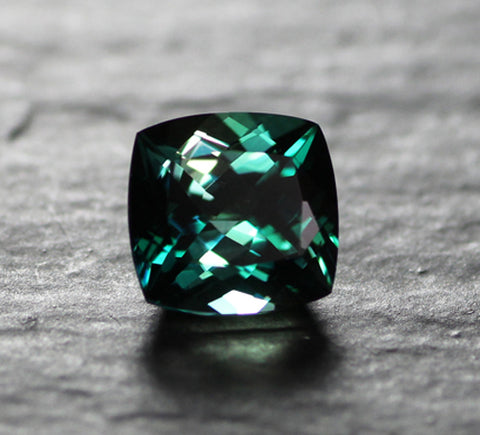
Grandidierite, considered one of the world’s rarest gemstones, is predominantly found in southern Madagascar. This magnesium-aluminum borosilicate displays striking blue-green to teal colouring with strong pleochroism—meaning it shows different colours when viewed from different angles. Clean, facetable grandidierite remains scarce, with most material too included or small for cutting.
Ocean Jasper is a rare, orbicular variety of jasper found only in Madagascar, featuring unique multicoloured patterns. Its swirling, orb-like inclusions and vibrant colors make it a favorite among collectors and jewelry designers.
Sphene (also called titanite) dazzles with gorgeous fire and dispersion that actually exceeds that of diamond. Stones from southern Madagascar can display vivid yellow-to-green colouring with spectacular internal brilliance. The tradeoff? Sphene is relatively soft (5-5.5 on the Mohs scale), making it better suited to earrings and pendants than rings that take daily wear.

Sapphirine—a rare blue to bluish-brown magnesium-aluminum silicate—gets its name from its sapphire-like colour. Stones from southern Madagascar sometimes confuse gem dealers until laboratory analysis confirms their identity. Like grandidierite and sphene, sapphirine appeals mainly to collectors and those commissioning one-of-a-kind pieces.
Labradorite from Madagascar is also highly prized for its labradorescence, featuring vibrant flashes of colour against a dark background.
These rare gems carry their own symbolic associations: grandidierite for inner truth and clarity, sphene for insight and brilliance, sapphirine for deep intuition and spiritual focus. As with all crystal meanings, these represent traditions and beliefs rather than medical claims.
Understanding the diversity of Madagascar’s gemstones also means recognizing the realities faced by those who mine them.
Mining Realities: Artisanal Work, Risks, and Community Life
Mining Methods

Behind every sparkling gemstone from Madagascar are human stories—often involving intense labour and significant risk in artisanal mining settings. Many of these operations are open-pit mines, where miners dig large, shallow pits with minimal machinery. Typical artisanal mining in Madagascar involves hand-dug pits and tunnels, sometimes reaching depths of 15 metres or more. Miners work with basic tools—picks, shovels, buckets—and little safety equipment, often under the harsh sun.
Working Conditions
-
Deeper shafts lack adequate ventilation and oxygen, and unstable pit walls pose a constant risk of collapse.
-
Working conditions are extremely dangerous with a high risk of collapse and death.
-
Miners carry rubble and sifted stones in heavy bags from the mining site, adding to the physical demands.
-
There are no hard hats, no reinforced supports, no emergency protocols like those required in industrial mining operations.
-
Many of these mines operate without official government authorization and are often considered illegal.
Economic Impact
-
In areas like Ilakaka and Sakaviro, entire extended family networks participate in the work.
-
Child labour is documented in some regions, with young people taking on tasks like washing and sorting that keep them out of school and expose them to environmental hazards.
-
Madagascar has one of the world’s highest poverty rates, with 75% of the population living below $1.90 a day.
-
Many small-scale miners receive only a tiny fraction of the market value for the rough stones they extract—often just 10%. The gemstone trade involves significant amounts of money, with miners hoping for a big sale that could change their fortunes.
-
Miners and intermediaries sell both high-value gems and small stones to buyers, often for less than their true market value. Small stones are frequently sold in bulk and play an important role in the jewelry manufacturing supply chain.
-
Corruption and bribery are common in the gemstone mining sector, affecting miners and exporters alike.
-
The sapphire market in Madagascar is controlled largely by foreign buyers, particularly from Sri Lanka and Thailand.
Environmental Concerns
-
Mining operations clear forests for pit access, discharge sediment into rivers, and disrupt water tables.
-
Once a rush moves on to new areas, restoration rarely happens.
-
These landscapes bear lasting scars that affect both wildlife and the human communities that remain, echoing the broader environmental impact of mined gemstones seen in many regions.
The journey of gemstones from Madagascar doesn’t end at the mine—let’s follow their path through the global supply chain.
From Mine to Market: Global Trade, Smuggling, and Certification
Supply Chain Challenges
The journey of Malagasy gems from mine to finished jewellery involves a complex web of transactions, intermediaries, and—too often—informal channels that evade official oversight.
-
Rough stones typically leave Madagascar through a mix of legal exports and unofficial routes.
-
In mining towns, foreign buyers—many from Sri Lanka or Thailand—purchase directly from miners or local aggregators.
-
These transactions often disadvantage miners who lack pricing knowledge and access to international markets.
Cutting and Export
-
Most sapphires and other rough gems travel to cutting centres in Sri Lanka and Thailand, where skilled lapidaries transform them into polished, faceted stones.
-
Heat treatment—applied to improve colour and clarity—happens during this phase.
-
Treated stones are then graded and, for higher-value specimens, laboratory-certified before moving to wholesale markets in Bangkok, Colombo, or Geneva.
-
Most of the profits from Madagascar's gemstones are made abroad, as rough stones are shipped to countries like Sri Lanka and Thailand for cutting and polishing, leaving local miners with only a fraction of the value.
Smuggling and Corruption
-
Madagascar’s bureaucratic export requirements are complex and sometimes contradictory.
-
Official export figures significantly underreport actual trade volumes, suggesting that substantial quantities leave the country through smuggling operations.
-
The illegal export of gemstones from Madagascar is common, with many miners and buyers circumventing official regulations and paying bribes.
-
Customs officers and local administrators have been implicated in facilitating illegal trade, with corruption forming an ongoing challenge for reform efforts.
Certification and Traceability
-
Laboratories like GIA (Gemological Institute of America) and SSEF (Swiss Gemmological Institute) can analyze stones to determine origin with reasonable confidence.
-
Some high-end jewellery brands have invested in blockchain tracking or synthetic DNA tagging systems that follow individual stones from mine to market.
-
Despite these tools, fully transparent supply chains remain works in progress, especially for small-scale producers who lack the resources to implement sophisticated tracking systems.
With these challenges in mind, how can jewelry makers and buyers support ethical and sustainable sourcing?
Ethical and Sustainable Sourcing: A Jewellery Maker’s Perspective
At Fierce Lynx Designs, we value the natural beauty and meaning of gemstones from around the world. We’re also deeply aware that mining—including in Madagascar—can involve significant social and environmental impacts. Navigating these realities as a small artisan jewellery brand requires honesty about what we can and cannot control, a core part of our story that we share about Fierce Lynx Designs handmade gemstone jewelry.
We believe that promoting global justice is essential in the gemstone supply chain. Supporting fair and ethical practices, and backing initiatives that ensure equitable benefits for mining communities, helps address social and environmental inequalities and encourages responsible industry standards, themes we explore in more depth in our ethical gemstones and sustainability hub.
The truth is, we typically buy our stones from trusted wholesalers and lapidaries rather than directly at the mine. This adds distance from original sources, making complete traceability difficult. Unlike major luxury houses with dedicated sourcing teams and million-dollar budgets, small makers work within practical constraints that limit direct verification.
What we can do matters, though:
-
Prioritize suppliers that provide origin information when available.
-
Avoid stones with any known links to conflict or egregious human-rights abuses.
-
Favour smaller, family-run cutting operations where relationships are longer-term and transparency tends to be better.
Beyond sourcing decisions, we consider environmental footprint in broader ways:
-
Use recycled metals to reduce demand for new mining.
-
Choose lower-impact stones, such as common quartz varieties, as beautiful alternatives to rarer gems.
-
Design pieces meant for years of wear—rather than seasonal disposability—to extend the life of materials.
For Madagascan gemstones specifically—certain sapphires, garnets, or rare collectors’ stones—we look for signs of responsible trade. Reputable laboratory certification helps. Relationships with suppliers who demonstrate commitment to supporting local communities matter. No system is perfect, but engagement beats disengagement.
We encourage you to ask questions when buying gemstone jewellery:
-
Where was this stone mined?
-
Was it treated, and how?
-
What steps does this brand take to improve traceability?
Not every seller will have complete answers, but the questions themselves signal that consumers care—and that signal gradually influences industry practices.
Beyond sourcing, many buyers are drawn to gemstones for their symbolic meanings and how they can be worn with intention.
Gemstone Meanings and How to Wear Madagascar Stones
While scientific geology explains how gems form deep in Earth’s crust, many people are drawn to gemstones for their symbolic meanings and perceived energetic properties. These associations come from spiritual, cultural, and metaphysical traditions rather than scientific claims, but they add another dimension of intention to jewellery choices.
Key Gemstone Meanings
|
Gemstone |
Crystal Meaning |
|---|---|
|
Sapphire |
Wisdom, mental clarity, truth, protection |
|
Ruby |
Passion, vitality, courage, heart energy |
|
Emerald |
Growth, compassion, prosperity, heart healing |
|
Aquamarine |
Calm, clear communication, ocean energy |
|
Garnet |
Strength, grounding, commitment, transformation |
|
Tourmaline |
Protection, emotional balance, creativity |
|
Rose Quartz |
Love, self-compassion, gentle healing |
|
Amethyst |
Calm, clarity, spiritual connection |
|
Clear Quartz |
Amplification, healing, energy clearing |
These meanings aren’t medical or psychological prescriptions—they’re part of traditional belief systems that many find personally meaningful.
Styling and Care Tips
-
Layer different gems in bracelet stacks.
-
Use a single rare stone as a focal point in a pendant.
-
Select colours based on what you want to invite into your life: blue for calm and communication, green for balance and growth, pink for self-compassion and love.
Care Tips:
-
Avoid harsh chemicals and extreme heat, which can damage some treatments or affect colour.
-
Store pieces separately to prevent harder stones from scratching softer ones.
-
Be especially gentle with softer gems like sphene.
At Fierce Lynx Designs, we build collections around themes—ocean, forest, zodiac signs, Canadian landscapes—using natural gemstones that may include types also sourced from Madagascar. Every piece is designed for durability and everyday wear, so your gems can become part of your life rather than sitting unworn in a drawer.
If you’re ready to buy, here’s how to make responsible choices when shopping for gemstone jewellery.
How to Buy Gemstone Jewellery Responsibly
Consumer choices genuinely matter. When enough buyers ask questions and demand transparency, industries respond. Your purchasing decisions can contribute—gradually but meaningfully—to improving conditions in mining regions like Madagascar.
What to Look For
-
Sourcing transparency: Does the brand share information about where stones come from? Even general information is better than complete silence.
-
Treatment disclosure: Reputable sellers explain any treatments performed on gemstones. Heat treatment is common and acceptable, but you deserve to know.
-
Laboratory certification: For higher-value stones, documentation from recognized labs like GIA adds confidence about authenticity and characteristics.
-
Handmade and small-batch production: When makers can describe their design process, materials, and care requirements in detail, you’re likely getting more thoughtful work than anonymous mass-produced items.
Buying Tips
-
Prioritize quality over quantity. Fewer, well-made pieces using durable settings and genuine natural stones will bring more lasting satisfaction than a drawer full of cheap synthetics marketed as “natural.”
-
Choose a single lovely bracelet or necklace you’ll wear for years, rather than seasonal throwaways.
-
Ask questions about origin, treatment, and sourcing practices.
-
Support brands that value both beauty and ethics.
At Fierce Lynx Designs, we emphasize natural gemstones, clear descriptions, custom sizing to extend wear life, and thoughtful design. We want our pieces to be cherished for years, becoming part of your story rather than passing through your collection briefly, whether you’re choosing from our regular lines or exploring unique finds in the Fierce Lynx Bazaar jewelry collection.
When you invest in gemstone jewellery, you’re connecting to a longer narrative that stretches from Madagascar’s hillsides—where miners dig in hope of a lucky find—through global trade networks, to the final piece that rests against your skin. Supporting makers who value both beauty and ethics helps shape a more positive narrative over time.
We invite you to explore natural gemstone jewellery with both appreciation and awareness. Ask questions. Seek transparency. Choose pieces that resonate with your values as well as your aesthetic sense. Your jewellery box can hold more than beautiful stones—it can hold the hope that this ancient trade continues evolving toward greater fairness and sustainability, especially when you stay informed through our Lynx Troop newsletter community.


