

If you were asked to name a gemstone, the odds that thulite would come to mind first are incredibly slim. However, that isn’t because the thulite stone isn’t especially beautiful. Thulite is a vibrant pink variety of the mineral zoisite. The vibrant pink colour of thulite, caused by manganese, is a key part of its visual appeal and is often associated with its metaphysical qualities, making it truly unique among gemstones. Thulite is named after the mythical island of Thule. Its striking colour and magnificent patterning make it a standout that jewelry lovers and collectors shouldn’t overlook.
This comprehensive article will cover everything you need to know about thulite, including its properties, meaning, uses, care, and stones similar to thulite. Whether you are a gemstone enthusiast, jewelry collector, or someone interested in the metaphysical properties of crystals, this guide is designed for you.
Thulite is a popular choice among gemstone enthusiasts for its vibrant pink colour and unique patterns. Due to its rarity, thulite can be more expensive than other common pink stones, such as rose quartz.
If you’re curious about thulite, including the thulite properties, meaning, and more, here’s what you need to know.
Thulite is also associated with the Heart chakra, promoting love, compassion, and emotional healing.
Thulite Properties: A Variety of Zoisite

While many call thulite a gem, that isn’t necessarily the best word to describe the stone. Instead, it’s a mineral. To be more precise, thulite is a vibrant pink variety of zoisite, highly prized for its beauty and energetic qualities, celebrated for its rich, rosy hues and occasional streaks of white or other colours. Like tanzanite, thulite is a calcium-aluminum silicate mineral. The chemical formula of thulite is Ca₂Al₃(SiO₄)₃(OH). Thulite typically forms in metamorphic rocks. Its intense pink-to-reddish colour is due to manganese, which gives thulite its distinctive appearance. Thulite is often found with quartz and can exhibit mottled patterns with white calcite.
When it comes to transparency, thulite is generally opaque. However, it can have crystal-like qualities, giving it a lovely shine or shimmer. It also polishes nicely since the stone has a fairly forgiving hardness score – usually near a 6 or 6.5 on the Mohs scale. Thulite is a soft mineral, ranking 6 to 6.5 on the Mohs scale, making it vulnerable to scratches. This makes thulite durable enough for use in jewelry and ornamental carvings, but it still requires care to avoid scratching. As a result, it often undergoes a polishing process to enhance its sheen and elevate its appearance, leaving it with a pearly finish offset by bright flashes from inclusions such as Quartz. Thulite displays a vitreous to waxy lustre and is typically opaque to translucent.
If you’re wondering, “Is thulite rare?” The answer is “yes.” The gem isn’t found in many areas; when it is discovered, high-quality specimens are usually in limited supply. Thulite typically occurs in massive or granular forms, though it can occasionally be found as small crystals. Its occurrence is often associated with metamorphic environments, and it is frequently found alongside other minerals. Notable localities for thulite include Norway, which is the type locality, as well as Austria, Italy, and the United States. These localities are significant for mineral collectors and document the natural occurrence of thulite.
Thulite is also often used in crystal healing practices for its metaphysical properties.
Thulite Colour

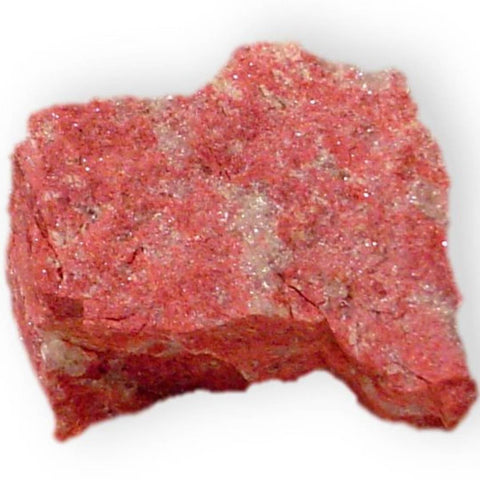
Thulite, also known as pink zoisite, occurs in a range of vibrant pink shades, often with mottled or streaked patterns. Thulite's distinctive pink colour is caused by manganese, which not only gives the stone its visually striking hue but is also believed to enhance its spiritual and healing properties. While it can sometimes lean into reddish territory, the surface frequently displays other colours, mainly due to white or gray quartz. Thulite is often mottled with white calcite, adding to its unique appearance.
Since the structure is crystal-like, white or gray quartz can be striking, particularly when light hits the surface. Couple that with a rich, rosy hue, and the overall look is warm, captivating, and even a bit romantic.
In some cases, the quartz segments are larger. This can create a nearly spotted look, as if someone splattered crystalline paint across the rich raspberry surface. In some cases, the patterning may resemble a Jackson Pollock, with a mix of large globs and gentle streaks giving each piece of thulite a look all its own.
The History of Thulite
Thulite gets its name based on where it was discovered. The thulite stone was initially found in Norway, in an area that may once have been known as Thule. Thulite is primarily sourced from Norway, where it was first discovered and named after the mythical land of Thule. Thulite is the national stone of Norway. Other localities have since been identified, expanding the known sources of thulite beyond its original Norwegian locality. While there is debate about whether Norway was Thule’s location, the stone was given the name nonetheless.
In terms of uses, thulite is primarily an ornamental stone. Along with being popular in jewelry, its somewhat softer hardness rating makes it a great choice for lapidary work and carvings.
Geological Environment and Formation
Thulite’s journey from deep within the Earth to a cherished gemstone is as fascinating as its vibrant pink colour. This mineral forms primarily in metamorphic rocks, where intense heat and pressure transform existing rock into something new and beautiful. Thulite is a variety of zoisite, and its signature pink hue comes from the presence of manganese, which replaces some of the calcium in the mineral’s structure.
You’ll often find thulite occurring in veins and fracture fillings that transect host rocks, sometimes forming large masses or intricate networks within the geological environment. These unique patterns—ranging from mottled streaks to bold splashes—are a direct result of the mineral’s growth within these natural spaces. The interplay of rock-forming minerals, such as quartz and calcite, adds to thulite’s distinctive appearance and makes each specimen truly one-of-a-kind.
While Norway remains the most famous source of thulite, with its ancient name and mythical island connections, the mineral has also been discovered in select locations around the world, including North Carolina in the United States and parts of Australia. However, high-quality thulite remains rare in the known world, making it a prized find for collectors and jewelry artisans alike.
Where Is Thulite Found?
Although it was originally discovered in Norway, thulite is still found there today. However, there are other sources of the gem. The thulite stone has also been found in several areas in the United States, particularly North Carolina. Sources have also been discovered in Austria, Australia, South Africa, Russia, and Namibia. The occurrence of thulite in these regions is often associated with metamorphic rocks and specific geological environments, making some localities notable for the rarity or quality of their thulite specimens.
In some cases, thulite is referred to as rosaline or rosaline zoisite. However, although the names differ, they generally refer to the same stone.
Some people favour Norwegian thulite for jewelry and collections. However, this mostly has to do with the stone’s history, not with variances in quality or colour between sources. Thulite is often confused with other pink minerals, but it can be distinguished by specific physical markers such as its hardness, crystal structure, and association with zoisite.
Thulite Jewelry
As mentioned above, thulite is fairly rare. Since there isn’t a steady supply of high-quality stones, most chain jewelry stores don’t carry thulite jewelry. This is mainly because thulite isn’t as popular as other gemstones. Two, lacking a reliable supply makes it hard to produce pieces featuring thulite for mass-market sale, making them less attractive to chain stores.
However, that doesn’t mean you can’t find thulite jewelry. Many independent jewellers enjoy working with thulite. Since they can run smaller runs and are comfortable with slight variations in the stone's appearance, they don’t have the same reservations as chain jewelry stores do. Thulite is a popular choice for those seeking unique and vibrant jewelry pieces.
Thulite is commonly used as a decorative stone in jewelry and carvings.
Since thulite is opaque, cabochons are more common in thulite jewelry than faceted stones, often featured in pendants and rings. Thulite beads are also quite popular, appearing in thulite earrings, strand necklaces, and bracelets. Thulite is commonly showcased with silver-colored metals, but wire-wrapping with rose gold or yellow gold gives it a high-end look. Thulite jewelry should be cleaned with a soft cloth to prevent damage.
Shop our Thulite Jewelry Collection
Sometimes, you may also see tumbled thulite, especially in pendants, drop earrings, and pendulums. On rare occasions, raw thulite may make its way into a piece. However, that's more likely with pendulums than with worn jewelry.
Thulite Meaning and Metaphysical Properties

As with many stones, the metaphysical properties of thulite can vary depending on the belief system involved. Some think the thulite crystal meaning focuses predominantly on love, happiness, and compassion, partly due to the stone’s vibrant pink colouring.
Many crystal healing practitioners also recommend charging thulite under the light of the moon, especially during a full moon, to amplify its metaphysical energy and benefits.
Thulite and the Heart Chakra
Thulite is also celebrated for its ability to foster empathy, encourage harmonious relationships, and promote unconditional love, especially through its strong association with the Heart chakra. By opening the heart, Thulite helps individuals develop greater understanding and emotional connection with others, leading to increased compassion and emotional healing.
Emotional Healing Benefits
It’s also frequently connected with emotional healing by confronting past negative experiences, ensuring opportunities for growth and progress. In those cases, thulite is viewed as a gem of self-healing, giving comfort and stability to a challenging journey. Thulite is believed to aid in healing emotional wounds and provide comfort and support for individuals dealing with emotional pain. Additionally, Thulite helps increase self-confidence by promoting self-expression and helping individuals overcome social inhibitions.
Thulite is associated with healing emotional wounds and promoting self-love and self-acceptance.
Creativity and Self-Expression
Others feel that the thulite crystal’s metaphysical properties inspire extroversion and eloquence. As a result, they may recommend the stone to those who need to lead public presentations, give speeches, or instruct classrooms full of students. Thulite also promotes joy, affection, and generosity, helping individuals recognize the goodness within themselves and others.
How to Use Thulite
As for the thulite chakra, most associate it with the heart chakra due to the stone’s colouring. The heart chakra is associated with pink and green, so gems in either of those hues can fall in that category. Thulite helps align the mind and heart, creating a balance between emotion and logic.
Regarding thulite healing properties, some connect the stone to overcoming gastric, reproductive, or circulation issues. However, it’s important to understand that the pink thulite healing properties aren’t substitutes for medical care. If you’re experiencing a health-related problem, seek care from a trained medical professional above all else. While holding, wearing, or meditating on thulite likely won’t cause harm, it shouldn’t be used as a sole or primary source of treatment or prevention for health concerns. Thulite is also known to enhance compassion and stimulate creativity, bringing a sense of joy and enthusiasm to its wearer.
Thulite encourages healthy habits, fosters harmonious relationships, and opens the heart to unconditional love, making individuals more generous in giving love and more gracious in receiving it. It also encourages individuals to be more spontaneous, creative, and open to adventure.
Care and Maintenance
Cleaning Thulite Jewelry
To keep your thulite jewelry looking its best, a little extra care goes a long way. Thulite rates about 6 to 6.5 on the Mohs scale, making it durable enough for everyday wear yet softer than many other gemstones. To maintain its shine and clarity, follow these cleaning tips:
-
Always clean thulite with a soft cloth.
-
If needed, use a bit of mild soap and lukewarm water.
-
Gently wipe your jewelry pieces to remove any dirt or oils.
-
Pat dry with a clean, soft cloth.
-
Avoid exposing thulite to harsh chemicals, including household cleaners and perfumes, as these can damage the stone’s surface and diminish its vibrant pink colour.
-
Ultrasonic cleaners and steam cleaning are not recommended, as the vibrations and heat can cause fractures or dull the polish.
Storing and Wearing Thulite Jewelry
When storing your thulite earrings, beads, or other jewelry, keep these tips in mind:
-
Store thulite jewelry separately from harder stones to prevent scratches.
-
Use a soft pouch or a lined jewelry box for added protection.
-
Remove your jewelry before engaging in activities that could cause heavy wear or impact.
Because thulite is a softer stone, it’s best to remove your jewelry before engaging in activities that could cause heavy wear or impact. With a little mindful care, your thulite jewelry will retain its beauty and unique patterns for years to come.
Stones Similar to Thulite
Since the stone is opaque and features bright pink colouring, few stones resemble thulite. However, a few may be reasonable substitutes in some situations. Here are some stones that are similar to thulite:
-
Pink Quartz: Tends to have a more delicate hue and is usually translucent or transparent, though some milkier stones may serve as solid stand-ins for thulite.
-
Pink Opal: Can have a similar sheen and colouring, though any mottling you find in those is typically more subdued than you see with thulite.
-
Pink Moonstone: Also offers a similar colour, but with more subtle mottling.
-
Pink Pearls: May come in a colour close to that of some thulite gems, though they are more suitable as alternatives to thulite beads.
-
Pink Coral: Can come in fairly dramatic shades, potentially making it a stronger match, but the mottling isn't usually as pronounced as you find with thulite. Coral jewelry can also be more expensive.
-
Pink Rhodochrosite: Features colouring that resembles thulite, but usually has dramatic, lighter-coloured stripes instead of mottling.
-
Pink Rhodonite: The pink shade might be close to what you see in thulite, but rhodonite tends to feature black inclusions rather than lighter spots.
Frequently Asked Questions about Thulite
What is Thulite good for?
Thulite is known for its energetic and healing properties. It is believed to enhance creativity, passion, and self-expression, making it a favourite among artists and those seeking to boost their creative endeavours. Emotionally, thulite is thought to promote joy, happiness, and positivity, helping to overcome feelings of loneliness and depression. It is also said to encourage a sense of adventure and curiosity, helping individuals to embrace new experiences and personal growth.
How rare is Thulite?
Thulite is considered a relatively rare mineral. It is a pink variety of the mineral zoisite, primarily found in a few locations worldwide. Its rarity adds to its appeal and value, particularly in gemstone and mineral collecting.
What chakra is Thulite?
Thulite is primarily associated with the heart chakra. It is believed to help open and balance this chakra, fostering love, compassion, and emotional healing. Thulite encourages harmonious relationships and emotional well-being by working with the heart chakra.
Where can I find Thulite?
Thulite was first discovered in Norway and remains one of its primary sources. It can also be found in other locations, such as Austria, Western Australia, and North Carolina in the United States. However, Norwegian thulite is often considered the most desirable due to its quality and vibrant colour.
What type of gem is Thulite?
Thulite is a variety of zoisite minerals classified as silicate minerals. It is known for its distinctive pink-to-reddish-pink colour due to the presence of manganese. Thulite is used in various forms of jewelry and ornamental carvings. It is prized for its attractive colour and relatively high hardness, making it suitable for a range of gemstone applications.
Conclusion and Final Thoughts
Thulite is more than just a beautiful pink stone—it’s a symbol of creativity, compassion, and unconditional love, inspired by the mythical island of Thule and the wonders of the natural world. Its vibrant pink colour and unique patterns make it a standout choice for anyone seeking jewelry that’s as meaningful as it is eye-catching. Whether you’re drawn to thulite for its healing properties, metaphysical energy, or simply its striking beauty, this rare mineral brings a sense of peace, self-confidence, and joy to those who wear it.
At Fierce Lynx Designs, we celebrate the artistry and symbolism behind every gemstone. Our thulite jewelry pieces are thoughtfully handcrafted in Canada, blending ancient inspiration with modern creativity. If you’re looking to add a touch of vibrant energy and heartfelt meaning to your collection, thulite is a truly special choice—one that connects you to the earth’s beauty and the stories woven through time.
Explore our thulite collection and discover how this remarkable stone can inspire your life and style.


