

Ametrine is a variety of quartz with alternating zones of purple and yellow-orange coloration. It is a unique gemstone that combines the colours of amethyst and citrine within a single crystal. The name "ametrine" is a portmanteau of its two components: amethyst and citrine.
This comprehensive guide covers everything you need to know about ametrine, including its meaning, healing properties, benefits, care, value, and more. Whether you are a jewelry enthusiast, gemstone collector, or spiritual practitioner, this article will help you understand why ametrine is such an important and fascinating stone.
Ametrine stands out for its striking bicolour appearance, blending the regal purple of amethyst with the sunny yellow of citrine in a single crystal. Beyond its visual appeal, ametrine is believed to offer a range of metaphysical benefits. Ametrine is a unique gemstone that combines the colours of amethyst and citrine in the same crystal. It is believed to promote stress relief, spiritual growth, creativity, and healing of body, mind, and soul. Ametrine calms the mind by clearing stress and tension, balancing and soothing emotions, and helping relieve depression. It is said to stimulate creativity, support personal empowerment, and encourage taking control of one's life. Ametrine strengthens the immune system and supports the autonomic nervous system. It is seen as a powerful detoxifier that clears negative energy and aligns the mind, body, and spirit for overall well-being. Ametrine instigates change, eases transitions, and supports emotional and spiritual growth.
Read on to discover the origins, properties, uses, and value of ametrine, and learn how to care for this rare and beautiful gemstone.
Introduction to Ametrine
Ametrine is a truly captivating gemstone that stands out for its remarkable fusion of colour and energy. This rare variety of quartz crystal is celebrated for its natural blend of amethyst’s regal purple and citrine’s sunny yellow, often appearing as a striking gradient within a single stone. The unique coloration of ametrine is the result of iron impurities within the quartz, which, depending on the conditions during the crystal’s formation, produce zones of both purple and yellow. This duality has earned ametrine the nickname “golden amethyst,” and it is sometimes referred to as trystine in the gem trade.
The story of ametrine is as fascinating as its appearance. According to legend, a Spanish conquistador first discovered this extraordinary stone in the 17th century while in South America. He is said to have brought the crystal back to Europe, introducing the world to its enchanting beauty. Today, most ametrine is mined in Bolivia, particularly from the renowned Anahí mine, but deposits are also found in Brazil and India. Each piece of ametrine is a testament to nature’s artistry, combining the best qualities of amethyst and citrine in a single, transparent crystal.
Whether admired for its vibrant purple and yellow hues, its geological origins, or its spiritual significance, ametrine continues to captivate collectors, jewelry lovers, and healers alike. Its presence in the world of gemstones is a reminder of the wonders that can be created when nature’s elements come together in perfect harmony.
Ametrine Properties & Physical Characteristics
Ametrine is not just a gemstone; it’s a silica mineral and a member of the broader quartz family. Its defining feature is the presence of alternating zones of purple (amethyst) and yellow-orange (citrine), with each colour clearly defined within the crystal. The name "ametrine" itself reflects this duality, combining "amethyst" and "citrine."
Ametrine forms when amethyst and citrine—both quartz minerals—occur together in the same crystal. The yellow colour in ametrine originates from trace amounts of iron in the crystal structure, and the unique colour zoning is due to varying iron oxidation states resulting from different temperatures during formation. Yellow quartz is another distinct type within the quartz family, recognized for its pure yellow hue, but it differs from the unique colour zoning seen in ametrine.
Fine ametrines generally have no eye-visible inclusions, which enhances their transparency and overall quality. Most ametrine on the market is prized for its clear colour zoning between the purple and yellow-orange sections and its lack of inclusions. Ametrine has a Mohs hardness of 7, making it suitable for everyday jewelry.
Geological Formation
Origin: Ametrine is formed in quartz veins in volcanic rocks. Its unique coloration is due to varying iron impurities and oxidation states resulting from different temperatures during the crystal’s formation.
Colour Formation: The purple colour is due to iron impurities exposed to radiation from the surrounding rock, while the yellow/orange colour (citrine) results from heat treatment by volcanic activity or natural earth processes. This yellow-orange variety is sometimes referred to as golden amethyst due to its distinctive hue. Ametrine's unique blend of purple and golden hues is caused by differing iron oxidation states within the crystal.

Ametrine is usually transparent, easily allowing light to pass through and even making it possible to view something positioned behind the stone. If there is a lack of transparency, it’s usually due to an impurity or other stone being attached to the gem.
Raw or rough ametrine has a crystal-like shape, just as you’d expect to find in other quartz variants. This version is highly desirable for some, as it allows the ametrine to maintain its natural look. However, ametrine also responds well to cutting, faceting, tumbling, and polishing, so it’s very common to find ametrine pieces that have been shaped in various ways.
Ametrine Stone Colour: Amethyst Citrine
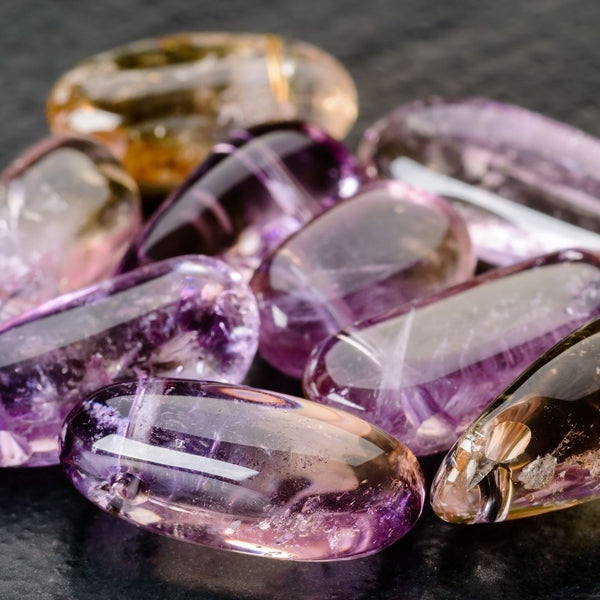
What makes ametrine intriguing is its colour combination. Natural ametrine features yellow and purple hues on opposite sides of the colour wheel, creating a lovely contrast.
The strength of the colour can vary. The most valuable pieces of ametrine feature deep, jewel-toned purple and yellow hues, creating a dramatic contrast. A high-quality photo of ametrine can be especially helpful to showcase the unique colour zoning and striking appearance of this gemstone. Ametrine gemstones with lighter shades of purple or yellow aren’t as highly sought after, so they are more affordable. Due to internal reflections, some ametrine stones may appear mauve, peach, or rosy gold.
It is important to note that while natural ametrine crystals are for sale, there are also colour-treated stones. Sometimes, a process is applied to make the hues brighter or deeper, making less desirable stones more intriguing to buyers. In others, the procedure allows a piece to be altered, creating a unique gemstone that resembles ametrine even though the yellow portion didn’t occur naturally.
While some jewelry sellers offer green ametrine or other non-traditional colour variants, none are natural ametrine stones. Sometimes these may be pieces of ametrine or other versions of quartz that have undergone colour treatments, while others are synthetic or lab-created stones.
Now that we've explored the physical characteristics of ametrine, let's look at its fascinating history.
The History of Ametrine
The history of ametrine is pretty straightforward. The stone gets its name by combining the names of the two other gems present, with the “ame-” coming from amethyst and the “-trine” coming from citrine.
However, the stone may also be known by other trade names, including “Bolivianite,” because it’s mined in Bolivia, or “bicolored quartz,” because it features two different quartz colours. In the gemstone trade, these names help market and brand ametrine in the jewelry industry.

Historically, the original source of ametrine was lost to commercial interests after the 17th century and was only rediscovered in the 1960s at the Anahí mine in Bolivia. Almost all commercially available ametrine is mined in Bolivia, specifically at the Anahí mine, the primary source of gem-quality ametrine.
The ametrine gem is generally used for ornamental purposes, particularly jewelry. Part of the reason it grew in popularity as a jewelry gemstone was the broad interest in bicolor. This led some stone cutters to begin faceting ametrine pieces that were half amethyst and half citrine, with the colour boundary straight and centred.
With its rich history established, let's explore where ametrine is found today.
Where is Ametrine Found?
Ametrine is only found in a specific part of eastern Bolivia. Today’s commercial ametrine comes from a single mine, the Anahi Mine, which isn’t far from the country’s border with Brazil. There, both citrine and amethyst occur, and when a piece of crystal is removed that features a bit of each stone, it’s classified as an ametrine. Ametrine deposits have also been found in India, though these are less commercially significant than those in Bolivia and Brazil. Most ametrine on the market is created by partially heating or irradiating amethyst to produce the characteristic colour zoning. This unique combination provides the benefits of both amethyst and citrine in one stone.
There’s a legend associated with the Anahí Mine. It’s said that a Spanish conquistador received the mine as a dowry when he married a native princess from the Ayoreo tribe in Bolivia. He brought ametrine back to Europe, introducing this gemstone to the Western world.
The world’s supply of ametrine is ultimately finite. As a result, high-quality specimens can be worth quite a bit. However, the ametrine crystal is affordable and often far less expensive than the bicolored tourmaline that inspired its use in jewelry.
Now that you know where ametrine comes from, let's examine the different types available on the market.
Types of Ametrine
Ametrine is a truly unique member of the quartz crystal family, celebrated for its striking blend of purple and yellow hues within the same crystal. This remarkable colour combination is the result of nature’s artistry, but not all ametrine is created the same way. There are three main types of ametrine available on the market: natural ametrine, heat-treated ametrine, and synthetic ametrine.
Natural ametrine is the most prized and sought-after variety. It is mined almost exclusively from the famous Anahi mine in Bolivia, where the unique geological conditions allow both amethyst and citrine to form together in a single crystal. The presence of iron impurities and temperature gradients during the stone’s formation creates the distinct purple and yellow zones that define natural ametrine. Each piece is a one-of-a-kind blend, with colours ranging from deep violet to golden yellow or even orange, depending on the specific conditions during its growth.
Heat-treated ametrine starts as natural amethyst. Through controlled heating, parts of the crystal are transformed, producing citrine-like yellow or orange tones, resulting in a similar but often less sharply defined colour gradient. While these stones still originate from natural quartz, the colour blend is created by human intervention rather than by nature alone.
Synthetic ametrine is grown in laboratories using the hydrothermal method, which replicates the natural conditions that produce ametrine. These lab-created stones can closely mimic the appearance of natural ametrine, displaying the signature purple-and-yellow blend. However, the difference lies in their formation—synthetic ametrine is not mined from the earth but created in controlled environments, and often lacks the subtle variations and internal character found in natural stones.
Understanding the difference between these types is essential for collectors and jewelry lovers. Natural ametrine, with its origin in Bolivia and its formation driven by iron impurities and natural heat, remains the most valuable and cherished for its rarity and beauty.
With the types of ametrine clarified, let's move on to how this gemstone is used in jewelry.
Ametrine Jewellery

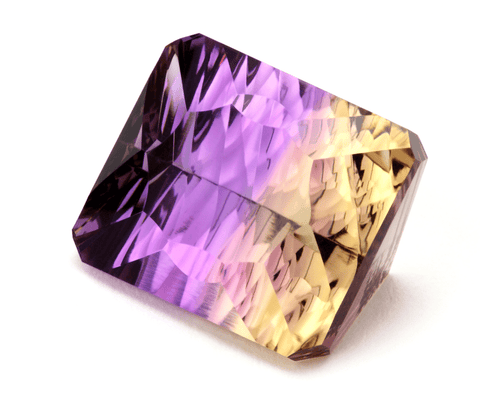
While you likely won’t find ametrine in chain jewelry stores, independent jewelry designers often feature the stone. Its unique colouring is almost always striking, and many appreciate the dramatic contrast, making the jewelry pieces featuring it fairly popular. Ametrine is often cut into emerald shapes to showcase its dramatic colour zoning, and some custom or branded cuts are named, such as the 'Ametrine SunRay™.' Due to its dramatic colour split, ametrine is highly valued by designers for its versatility in various jewelry styles. Many designers also offer custom designs for unique, personalized ametrine jewelry. Ametrine can be paired with other gemstones, such as rainbow fluorite and citrine pearls, to create unique jewelry designs. In jewelry, ametrine is complemented by yellow gold to enhance its citrine zones, and by silver or white gold to accentuate its amethyst zones.
For anyone seeking an ametrine pendant or a natural ametrine ring, there are two options for the stone. Both faceted gems and cabochons are available, and you may even find some featuring raw or rough ametrine crystal with little, if any, shaping.
If you’re looking for an ametrine bracelet, options featuring ametrine gemstone beads are reasonably available. You may also find beads in strand necklaces and certain ametrine earrings.
However, it’s important to note that bead strands marketed as ametrine may feature a combination of amethyst and citrine beads, without any beads that feature both stones. Technically, a bead isn’t ametrine if it doesn’t contain both crystal types, so keep that in mind when looking for jewelry.
Now that we’ve covered ametrine’s use in jewelry, let’s explore its metaphysical properties and benefits.
Ametrine Metaphysical Properties and Benefits
Ametrine inherits metaphysical properties from both stones as a naturally occurring blend of amethyst and citrine. It is highly valued in various spiritual and healing circles for its unique combination of energies. Here's a breakdown of its metaphysical properties and perceived benefits:
Ametrine Metaphysical Properties
-
Balance and Harmony: Ametrine is believed to embody the balance and harmony of its constituent stones, amethyst and yellow citrine, bringing together masculine and feminine energies, intellectual and emotional strengths, and physical and spiritual aspects.
-
Cleansing and Protection: Like amethyst, ametrine is thought to have a cleansing and highly protective crystal energy, helping to clear negative energies from the environment and one's aura.
-
Abundance and Prosperity: Citrine-derived ametrine is often associated with attracting abundance, wealth, and success.
-
Enhanced Mental Clarity: It is said to stimulate the intellect, relieve stress and tension in the head, calm the mind, and support decision-making.
-
Spiritual Growth: Ametrine encourages spiritual growth and enlightenment, often used to deepen meditation and enhance intuition.
Perceived Benefits of Ametrine
Emotional Well-Being
-
It's believed to help balance emotions, promote emotional stability, and relieve depression and anxiety.
Creativity and Inspiration
-
Creativity and Inspiration: Ametrine is thought to stimulate creativity, making it popular among artists, writers, and anyone involved in creative pursuits.
Physical Health
-
While not a substitute for medical treatment, ametrine in crystal healing is sometimes used to aid digestion, boost energy levels, and support the immune system.
-
Career and Business: People use ametrine to attract success in business endeavours, improve concentration, maintain emotional self-control and foster a good work environment.
-
Relationships: Its balancing energy is also said to be helpful in relationships, fostering understanding and harmony.
Using Ametrine
-
Meditation and Yoga: Used during meditation or yoga, ametrine can help in achieving a deeper state of relaxation and clarity.
-
Jewelry: Wearing ametrine jewelry is thought to continuously impart energetic benefits to the wearer.
-
Placement in Home or Workplace: As a decorative element, it is believed to maintain a delicate balance of energies in a space, promoting a positive atmosphere.
It's important to note that ametrine's metaphysical properties and benefits, like those of any crystal, are largely based on belief systems and personal experiences rather than scientific evidence. People are drawn to ametrine for its aesthetic beauty and the well-being it provides. Whether or not one subscribes to these beliefs, ametrine remains a fascinating and beautiful gemstone.
Having explored the metaphysical aspects, let's look at the healing properties attributed to ametrine.
Ametrine Healing Properties

Like many gemstones, Ametrine is believed by some crystal healing practitioners to possess physical healing properties. These beliefs are part of alternative or metaphysical healing practices and are not supported by mainstream scientific evidence. However, they are integral to certain holistic and spiritual healing traditions. Here are some of the physical healing associations attributed to ametrine:
Stress and Tension Relief
-
Ametrine is said to be effective at alleviating stress and tension, potentially aiding muscle and nerve relaxation.
Digestive Health
-
It is sometimes used to improve digestion, possibly by positively influencing the solar plexus chakra, which is associated with gut health.
Immune System Support
-
Some believe that ametrine can bolster the immune system, supporting the body's natural defence mechanisms.
Chronic Conditions
-
There are claims that ametrine can help deal with chronic fatigue syndrome and treat arthritis and depression, although these claims lack scientific backing.
Detoxification
-
Ametrine is also associated with detoxification and is believed to support the liver and endocrine system.
Pain Relief
-
Some users turn to ametrine for pain relief, particularly headaches and migraines, drawing on the stone's purported calming energy.
Metabolism and Energy Levels
-
It's occasionally used to boost metabolism and increase energy, which may be helpful for those experiencing lethargy or fatigue.
Some imitations of ametrine use natural materials chosen to impersonate the gemstone.
Usage in Healing Practices
-
Direct Contact: The stone is often placed directly on the body or on the specific part needing healing during a crystal healing session.
-
Wearing as Jewelry: Wearing ametrine jewelry is another way people seek to gain its healing benefits, allowing for continuous exposure to the stone's energy.
Disclaimer and Perspective
It's essential to approach these beliefs with a balanced perspective. While many people find comfort and personal value in using crystals like ametrine for physical and emotional healing, these practices should not replace conventional medical treatment. Professional healthcare advice should always be sought for physical ailments. The healing properties attributed to gemstones in crystal healing are part of a spiritual and holistic worldview and are not validated by modern medical science.
Now that you know about ametrine's healing properties, let's discuss how to care for and maintain this beautiful gemstone.
How to Care for Ametrines

Caring for and cleansing ametrine is important to maintain its physical beauty and vibrational properties for those who believe in crystal energies. Like other quartz crystal varieties, Ametrine rates a seven on the Mohs scale of hardness, making it relatively durable but susceptible to scratches and damage if not handled properly. Here's how you can care for and cleanse your ametrine:
Basic Care
-
Avoid Harsh Chemicals: Keep ametrine away from harsh chemicals and household cleaners. Exposure can damage the stone or affect its colour.
-
Protect from Scratches: To prevent scratches, store ametrine separately from other gemstones. A soft pouch or a fabric-lined jewelry box is ideal.
-
Avoid Extremes: Sudden temperature changes and prolonged exposure to intense heat or light can damage ametrine. Avoid leaving it in direct sunlight for extended periods, as it can fade the colour.
Cleaning Ametrine
-
Gentle Washing: Clean ametrine with lukewarm water and a mild soap. Use a soft brush, like a toothbrush, to gently scrub the stone and setting.
-
Rinse Thoroughly: Ensure all soap is rinsed off, as residue can leave a film on the stone.
-
Dry Carefully: Pat dry with a soft, lint-free cloth.
Energetic Cleansing of Ametrine
For those who use ametrine for its metaphysical properties, regular energetic cleansing is believed to clear the stone of any absorbed negativity and rejuvenate its natural energies. Several methods of energy cleansing can be used:
-
Water Cleansing: Briefly run the stone under running water (tap water is fine), visualizing the water clearing away negative energy. Be cautious with water temperature and exposure time.
-
Moonlight: Place ametrine under the moonlight overnight, especially during a full moon, for a gentle and thorough cleansing.
-
Smudging: For a traditional smudging cleanse, pass the stone through the smoke of a sage stick or palo santo.
-
Sound Cleansing: Use singing bowls, bells, or chanting to cleanse ametrine with sound vibrations.
-
Other Crystals: Place ametrine on a bed of clear quartz or amethyst, as these crystals are believed to cleanse and recharge other stones.
Regular Maintenance
-
Periodic Inspection: If your ametrine is set in jewelry, periodically inspect the settings to ensure the stone's security.
-
Professional Cleaning: For valuable pieces, professional cleaning and inspection are recommended.
Caution
-
Avoid Ultrasonic and Steam Cleaners: These cleaning methods can damage ametrine, especially if it has inclusions or fractures.
In summary, the care and cleansing of ametrine involve both practical steps to maintain its physical condition and, for those inclined, metaphysical practices to keep its energetic properties vibrant. Whether you view ametrine as a beautiful gemstone or a tool for spiritual practice, proper care will ensure its longevity and beauty.
With care and maintenance covered, let's turn to the market value and pricing of ametrine.
Market Value and Price of Ametrine
The market value and price of ametrine can vary widely, influenced by several key factors that collectors and jewelry enthusiasts should consider. The most significant determinant is whether the stone is natural, heat-treated, or synthetic. Natural ametrine, especially those with vivid purple and yellow colour zones and clear internal reflections, commands the highest prices due to its rarity and the limited output from the Anahi mine in Bolivia.
Ametrine’s value is also shaped by the intensity and clarity of its colours. Stones that showcase a sharp, dramatic contrast between purple and yellow are especially prized. The presence of well-defined colour separation zones, rather than a muddled blend, adds to the stone’s desirability. Additionally, the artistry of the cut plays a major role—fantasy cuts and creative faceting can enhance internal reflections and showcase the unique colour gradient, further increasing the stone’s appeal and price.
In terms of price range, ametrine can be surprisingly accessible for a rare gemstone. Smaller stones or those with lighter colours may be available for a few hundred dollars per carat, while larger, high-quality specimens with exceptional colour and clarity can reach several thousand dollars per carat. The average price per carat of ametrine does not increase significantly with larger sizes, owing to its availability in large, clean pieces. Some resources or memberships provide full access to detailed ametrine price guides, which can be helpful for buyers and collectors seeking up-to-date pricing information. The market also values stones differently depending on whether they are set in jewelry or sold as loose gems, with custom-cut or artistically carved pieces often fetching a premium.
Ultimately, the main value points for ametrine are the depth and vibrancy of its purple and yellow hues, the precision of its cut, and the uniqueness of its internal colour zones. These factors, combined with the stone’s rarity and the skill of the gem cutter, make ametrine a standout choice for those seeking a gemstone that is both beautiful and distinctive.
Now that you know what affects ametrine’s value, let’s discuss how to ensure authenticity through certification.
Certification and Authentication of Ametrine
With the growing popularity of ametrine and the presence of synthetics and treated stones in the market, certification and authentication have become essential for anyone looking to invest in or collect this unique gemstone. Reputable gemological laboratories offer certification services that verify the identity, quality, and origin of ametrine, providing peace of mind for buyers and sellers alike.
The certification process involves a thorough examination of the stone’s physical and optical properties. Experts assess the ametrine’s Mohs hardness (which, as a quartz variety, is typically 7), refractive index, and specific gravity to confirm its authenticity. Advanced tools and techniques are used to detect treatments, such as heat enhancement or dyeing, that can affect both the stone's value and classification.
Certification is particularly important because synthetics and treated stones can closely resemble natural ametrine, making it difficult for even experienced buyers to distinguish between them without specialized equipment. A certified stone comes with documentation detailing its characteristics, any detected treatments, and its origin—information that is invaluable for collectors, jewelry designers, and anyone seeking to ensure the authenticity of their purchase.
In today’s market, where the differences among natural, heat-treated, and synthetic ametrine can significantly affect value, obtaining certification is a smart step. It not only protects your investment but also ensures you enjoy the true beauty and rarity of this remarkable stone.
With authentication in mind, let's look at stones similar to ametrine.
Stones similar to Ametrine
Overall, there aren't many strong substitutes for ametrine. Bicolored stones are rare, and you won't have much luck finding alternatives that feature yellow and purple specifically.
The only exception may be certain pieces of bicolored tourmaline. While purple tourmaline isn't usually found with yellow, certain yellow-and-pink bicolored tourmaline crystals resemble ametrine. The issue is that they cost more than ametrine, which may not be ideal.
Large ametrine material is popular with gem carvers for their creations.
Otherwise, the only solid alternatives tend to be synthetic or lab-created. But since ametrine is usually reasonably affordable, it may make more sense to stick with the real deal if you want a stone with that particular look.
Now, let's answer some of the most frequently asked questions about ametrine.
Frequently Asked Questions About Ametrine
Is ametrine a rare gemstone?
Ametrine is relatively rare in its natural form. The most significant source is the Anahí Ametrine Mine in Bolivia. While other sources of quartz exhibit a mixture of purple and yellow hues, the distinct, natural bicolor characteristic of Bolivian ametrine, in which the colours are separated within the crystal, is less common. However, this rarity is specific to natural ametrine; synthetic ametrine, created by artificially combining amethyst and citrine, is more readily available.
Is ametrine an expensive stone?
The price of ametrine can vary. Natural, high-quality ametrine with a clear, distinct separation of purple and yellow colours and no inclusions can be considered valuable and fetch higher prices. However, compared to many other gemstones, ametrine is generally more affordable. The cost can also depend on factors such as the intensity of the colours, the size of the stone, and the quality of the cut. Synthetic or treated ametrine is typically less expensive than natural ametrine.
How can you tell if ametrine is real?
To determine if ametrine is real (natural), consider the following:
-
Colour Zones: The transition between yellow and purple in natural ametrine is typically quite abrupt. Synthetic versions may show more blended colours.
-
Inclusions: Natural ametrine may have inclusions or minor imperfections, which are less common in synthetic stones.
-
Temperature Test: Natural ametrine will typically feel cool to the touch.
-
Professional Testing: A gemologist can examine the stone with tools such as a refractometer or a microscope to definitively identify it.
What chakra is ametrine good for?
Ametrine is believed to be beneficial for several chakras due to its combination of amethyst and citrine properties:
-
Solar Plexus Chakra: The citrine component of ametrine is associated with the solar plexus chakra, which is believed to aid self-confidence and personal power.
-
Crown Chakra: The amethyst aspect is linked with the crown chakra, enhancing spiritual awareness and wisdom.
-
Third Eye Chakra: Some also believe ametrine stimulates the third eye chakra, promoting intuition and psychic abilities.
By integrating the qualities of amethyst and citrine, ametrine is thought to harmonize physical and spiritual awareness, making it a versatile stone in chakra-based practices.
Conclusion and Final Thoughts
Ametrine is more than just a beautiful gemstone—it’s a symbol of balance, creativity, and the harmonious blending of energies. Its unique combination of amethyst and citrine within the same crystal offers not only a stunning visual effect but also a powerful synergy of metaphysical properties. From its origins in the volcanic rocks of Bolivia to its journey into the hands of artisans and jewelry lovers around the world, ametrine’s story is one of rarity, resilience, and natural artistry.
Whether you’re drawn to ametrine for its vibrant purple and yellow colours, its reputation for supporting spiritual growth and emotional balance, or its versatility in handmade jewelry, this gemstone is a meaningful addition to any collection. At Fierce Lynx Designs, we celebrate the beauty and individuality of natural gemstones like ametrine, crafting each piece with care and intention. Choosing ametrine jewelry is not only a way to adorn yourself with nature’s wonders but also to embrace the values of ethical sourcing, artisan craftsmanship, and personal expression.
As you explore the world of natural gemstones and handmade jewelry, let ametrine inspire you to seek harmony, creativity, and a deeper connection to the earth’s treasures. Whether as a gift or a personal talisman, ametrine is a gemstone that truly stands out—both for its beauty and the story it tells.


