

The amber gemstone is an organic gemstone formed from tree resin, renowned for its radiant beauty, unique inclusions, and rich cultural history. This comprehensive guide will cover everything you need to know about amber gemstones, including their properties, fascinating history, how they form, colour varieties, uses in jewelry, care and maintenance, symbolism, and value. Whether you are a jewelry enthusiast, collector, or simply curious about amber, this article will help you understand why amber matters—thanks to its unique origins, natural beauty, and enduring cultural significance.
Amber is not a mineral but an organic gemstone formed from tree resin. It is popular in jewelry due to its warm touch and lightweight nature, and it often contains inclusions such as preserved leaves, pollen, and insects. The amber gemstone has been treasured since prehistoric times for its captivating appearance and symbolic meanings, making it a favourite among those who appreciate both natural wonders and historical artifacts.
Quick Summary: What Is Amber Gemstone?
-
Definition: Amber is an organic gemstone formed from tree resin.
-
Properties: Lightweight, warm to the touch, and often contains inclusions such as preserved leaves, pollen, and insects.
-
Uses: Popular in jewelry, healing practices, and symbolism.
-
Care: Soft (2-2.5 on the Mohs scale); handle gently and keep away from chemicals and heat.
-
Value: Ranges from affordable to valuable, depending on colour, clarity, inclusions, size, and origin.
-
Colours: Mainly yellow to brown, but can also be orange, green, red, white, or rare blue.
-
Other Facts: Amber can float in saltwater due to its low density, is known as 'The Gold of the North,' and is historically called 'Nordic Gold' or the 'Tears of the Gods.' It symbolizes warmth and positive energy, is believed to absorb negative energy and convert it into positive energy, and is used in alternative medicine to aid with chronic pains, headaches, and toothaches.
Amber Properties: What Exactly Is Amber?
Amber isn’t a mineral gemstone like most other gems used in jewelry or for similar ornamental purposes. Instead, amber is an organic gemstone formed from tree resin. Amber is composed of organic compounds, including resins and oils, which contribute to its unique characteristics and value. As the tree resin hardens, it develops gem-like qualities, maintaining its form and polishing nicely. Amber's ability to be cut and polished into gemstones makes it highly versatile and suitable for use in jewelry.
Amber is popular in jewelry due to its warm touch and lightweight nature. It often contains inclusions such as preserved leaves, pollen, and insects, which add to its uniqueness and scientific value.
Is Amber a Real Gemstone?
As mentioned above, amber isn't a mineral-based gemstone. Instead, it's generally considered an organic gem due to its composition. Amber is created when pine tree resin hardens, giving it a stone-like consistency. It's real in that it's naturally occurring, though it's not stone in the traditional sense. Instead, it's more classically considered a fossilized resin or an organic gem.

If you're wondering, “How can you tell good quality amber from fakes?” the process of separating the two is reasonably easy. Authentic amber is typically light for its size, so a piece's weight may provide clues. Classically, it feels warmer to the touch, whereas many fakes made from plastic or glass seem cold.
Additionally, amber floats in salt water. Imperfections or shifts in coloration also commonly occur with genuine amber. Scratch and hot needle tests may also help a person identify natural amber, but it does run the risk of damaging the stone.

Is Amber Rare?
Amber isn’t overly rare overall. However, some versions are incredibly scarce. As a result, if you’re wondering, “Is amber an expensive stone?” the answer is, “It depends.”
Usually, the rarest and most expensive pieces of amber contain insect inclusions, such as mosquitoes. The insects became trapped in the tree resin when it was still wet. As the amber coated them, it essentially encased the insects, preserving their bodies within the hardening material. Since amber is typically transparent when polished, the insect remains visible within the pressed amber, which is attractive to collectors. Pressed amber is often made from small pieces of amber fused under heat and pressure to form larger, more cohesive pieces.
Amber may also contain other trapped organic materials, like leaves. However, while these have scientific value, they aren’t as popular as versions containing insects. As a result, the plant material-containing versions aren’t overly expensive.
When it comes to amber without inclusions, those specimens are relatively common. As a result, the price is typically quite affordable. The only exception is large pieces of amber. Even without inclusions, bigger specimens are rare, which makes them quite expensive.
Now that we've explored what amber is, let's look at how this fascinating gemstone forms over millions of years.
Amber Formation: How Does Amber Form?
Amber’s journey begins millions of years ago, when sticky tree resin—most often from ancient coniferous trees—oozed from bark and branches, acting as a natural defence against injury or pests. Over time, this resin would drip to the forest floor or become trapped within the tree itself.
Over millions of years, the resin hardened and fossilized through heat, pressure, and burial beneath layers of sediment, eventually becoming what we know as amber. Although amber deposits are found in several regions worldwide, the two main sources are the Baltic states and the Dominican Republic, with the traditional primary supply coming from Eastern Europe; other notable deposits also occur in Mexico. In ancient times, it was also traded along the Amber Road. Greater access from the Baltic states in previous years has made more material available on the market today, helping longtime collectors and new amber enthusiasts just entering the market compare origins, rarity, and amber prices. These remain the main sources most often discussed when comparing origin and value.
When it comes to amber without inclusions, clarity, colour, and natural beauty play the biggest role in value. The common variety is yellow amber, and it makes up around 70 percent of all amber. Black amber accounts for about 15 percent, white amber about 1–2 percent, green amber about 2 percent, and red amber, also called cherry amber, only about 0.5 percent. Usually, the rarest and most expensive pieces of amber contain insect inclusions, though by colour, the rarest is typically blue amber, while cherry and green examples are also scarce.
The Fossilization Process
In the right conditions, such as those found in the lush forests of the Baltic Sea region, the resin was quickly buried by layers of soil, sand, or sediment, protecting it from air and slowing its decay. As the years passed, the buried resin underwent a remarkable transformation. Through a process called polymerization, the organic compounds in the resin bonded together, gradually turning it into a stable, fossilized tree resin—what we now know as amber. This transformation could take anywhere from a few million to over a hundred million years, depending on environmental factors like temperature, pressure, and the presence of microorganisms.
Prehistoric Snapshots
One of amber’s most fascinating features is its ability to preserve tiny snapshots of prehistoric life. As the resin flowed, it sometimes trapped insects, plant fragments, or even small vertebrates, encasing them in a golden tomb. These inclusions provide scientists with invaluable insights into ancient ecosystems, thereby enhancing the allure and value of amber pieces.
Major Amber Deposits
The Baltic Sea region is especially famous for its rich deposits of Baltic amber, which is prized for its clarity, colour, and abundance of inclusions. Today, most amber found around the world originated as tree resin in similar ancient environments, making each piece a unique window into Earth’s distant past.
With an understanding of how amber forms, let's explore the beautiful range of colours this gemstone can display.
Amber Gemstone Colours

Amber is classically known for its rich golden colouring, but it can be found in a variety of hues. The colour of amber is one of its most distinguishing features and can affect its value and desirability.
Common Amber Colours
-
Yellow: The most common colour, ranging from pale lemon to deep honey.
-
Orange: Warm, vibrant shades that are highly recognizable.
-
Brown: Earthy tones, sometimes with yellow tinges.
Rare Amber Colours
-
Green: Less common; green amber often has an earthy or olive appearance.
-
Red: Sometimes called "cherry amber," red amber is rare and highly prized.
-
White: Also rare, often with a milky, more opaque appearance.
-
Blue: Extremely rare, mostly found in Dominican amber, and often considered the rarest amber by collectors.
Some amber also features a bluish white or greenish fluorescence. Those pieces are highly prized due to their rarity, making them favourites among collectors.
Now that we've seen the spectrum of amber colours, let's delve into the rich history and cultural significance of this ancient gemstone.
The History of the Amber Gemstone
Amber is potentially one of the first gemstones used broadly for ornamental purposes. Evidence suggests that it has been used since the Stone Age. Amber artifacts dating to the Neolithic have been found, highlighting their ancient use and significance in early human civilization.
Amber in Early Cultures
Unlike most other gems, you don’t necessarily have to dig into the earth to see it. As a result, it was highly accessible to cultures well before mining, and the use of similar industrial practices became the norm.
Amber also served other purposes historically. It was used as a fuel source in some cases. Additionally, many ancient healing and medicinal practices involve amber.
Medieval and Modern Significance
During the Middle Ages, amber gained further significance as Gdańsk became a center for amber craftsmanship, and the stone played a major role in trade and artistry.
Amber has been associated with the sun over the years due to its colouring, particularly when illuminated. Many cultures associate the properties of amber crystals with the natural world; some even believe that amber stones are the tears of gods or ancient heroes. In Poland and the Baltic region, amber was often referred to as "The Gold of the North" due to its value, rarity, and beauty.
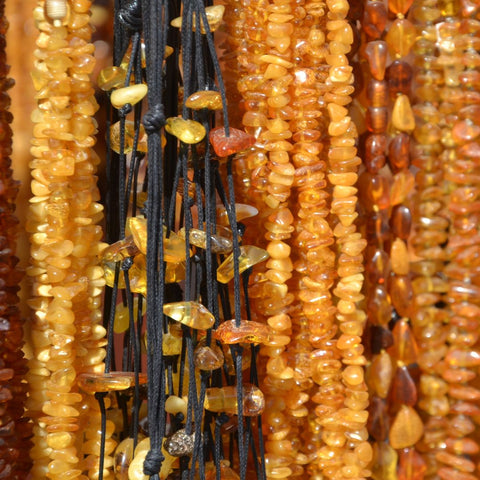
Symbolism and Carving Traditions
Since amber was easy to carve, it was also used to imbue the wearer of amber amulets with the strengths of certain animals. The ancient Romans and Greeks viewed amber as a symbol of fertility, often depicted in the form of rabbits, frogs, and fish. Chinese culture held that amber contained the souls of tigers, while the Vikings used a variety of animals to embody key characteristics they associated with those animals. Amber artifacts have been discovered in archaeological sites, underscoring their cultural and historical importance.
There are also associations with magic. Many think the connection is related to amber's electrostatic properties, a detail often tied to the amber meaning in myth, symbolism, and cultural belief. When properly charged, it creates a static pull, which isn’t common among other stones. The Greeks even referred to amber as “elektron,” which is the basis for current terms like “electron” and “electricity.” The term "Arabic anbar" refers to the use of amber as a perfume and to its mention in ancient legends and Arabic mythology.
While some of those beliefs diminished with time, amber remained a popular jewelry and ornamental stone. Its golden-amber glow is both warm and comforting, and, as an organic precious stone, it has long been valued differently from mineral gems. As a result, it was a favoured stone by many.
Having explored amber's history, let's discover where this remarkable gemstone is found around the world.
Where Does Amber Come From?
Since amber is a form of hardened tree resin, it is found in countries all around the world. Major sources of amber include:
-
Austria
-
Canada
-
China
-
Colombia
-
India
-
Jordan
-
Sweden
-
Syria
-
Russia
-
The United Kingdom
-
The United States
-
Germany
-
Lithuania
-
Latvia
-
Poland
-
Myanmar (Burma)
-
Dominican Republic
However, certain types of amber have relatively specific origins. Here's a closer look at different types of amber.
Baltic Amber

Baltic amber is a type of amber found in the Baltic region, encompassing countries such as Germany, Lithuania, Latvia, and Poland. Compared with other amber varieties, it contains higher levels of succinic acid. As a result, it's sometimes referred to as succinite. Historically, it was also called Prussian amber.
Dominican Blue Amber

Of the two main sources of amber gemstones, Baltic amber comes mainly from the Baltic states, while Dominican amber comes from the Hymenaea protera tree, which is now extinct. Generally, Dominican amber resin is nearly always transparent, while some other versions may exhibit cloudiness. Additionally, the occurrence of organic material being trapped inside and preserved is higher.
Dominican amber typically comes from one of three major mining sites in the country. Baltic amber remains one of the main sources in the trade, and economic changes in Eastern Europe have made it more available in the market today than in previous years. That wider availability gives amber enthusiasts and new buyers more access, though origin still affects prices. While it usually has a traditional golden hue, some specimens exhibit a different hue. Dominican blue amber is a naturally occurring, rare gemstone. Specific conditions created by the Hymenaea protera tree species are required for this coloration; therefore, it isn't found in many amber forms from other regions of the world.
Burmese Amber
Burmese amber originates from a specific region in Myanmar (formerly Burma). Some specimens date back approximately 100 million years, and the organic inclusions found within them provide clues about the environment and animal species that existed during that period. As a result, it's highly valued by collectors and the scientific community.
Now that you know where amber comes from, let's examine what determines its value and quality.
Amber Quality Factors: What Determines Value?

Not all amber is created equal—a combination of natural beauty, rarity, and unique features shapes its value. When evaluating amber gemstones, unlike many colored gemstones, amber is so light that buyers often notice size before weight, and several key quality factors come into play:
-
Colour: Shades range from classic golden yellow and warm orange to deep brown, vibrant green, and even the rarest blue and cherry amber. Yellow, orange, and brown are the most common; green and blue are rare and highly prized.
-
Clarity: Amber can be crystal clear or cloudy, filled with tiny bubbles or organic matter. Transparent amber with visible inclusions—especially insect inclusions—is the most valuable.
-
Inclusions: The presence of perfectly preserved insects or plants can transform a simple gemstone into a scientific treasure, significantly enhancing its value.
-
Size: Larger pieces, particularly from the Baltic Sea area, are rare and more valuable, and carat weight matters less here than with many gems because amber is lightweight and often judged more by dimensions than weight.
-
Origin: The source of the amber (e.g., Baltic, Dominican) can influence desirability and price due to differences in colour, clarity, and inclusions.
-
Special Features: Sun spangles (shimmering discoid fractures formed when amber is gently heated) and unique fluorescence enhance its appeal.
Whether destined for amber jewelry, amber perfume, or as a collector’s specimen, understanding these quality factors helps you appreciate the true value and natural beauty of each piece of fossilized tree resin.
With value factors in mind, let's explore how amber is used in jewelry and design.
Amber Jewelry Pieces
Amber Jewelry Types
Amber jewelry has been popular since ancient times and is still widely worn today. Generally, you won't see much amber jewelry in chain stores, primarily because its colorations can vary, and inclusions are common. Mass jewelry production typically relies on consistency, which is challenging to achieve with amber.
However, independent jewellers regularly work with amber. Independent designers can typically produce small runs or one-off pieces to take advantage of uniquely beautiful amber. As a result, finding amber jewelry isn't overly difficult.
Amber Jewelry Design

Usually, amber isn't faceted. Instead, it's left in organic shapes and tumbled or polished, which suits the rustic, bohemian, and high-fashion jewelry designs where it often appears. Amber beads are popular, and you'll often find cabochons as well. At times, amber is carved into different shapes for decorative objects, such as hearts or animal figures. Amber jewelry is often set in silver or gold.
Amber is popular for a wide variety of jewelry types since it's relatively lightweight, making it comfortable to wear for longer periods. Necklaces, earrings, pendants, and rings are all widely available, and some amber necklace styles are also commonly worn for infant teething relief. Amber also makes appearances in pendulums. Some spiritual practitioners prefer amber directly on the skin during energy-focused practices.
Now that we've covered amber's use in jewelry, let's explore the deeper meanings and symbolism associated with this ancient gemstone.
Amber Stone Meaning and Symbolism

Ancient Symbolism
As with most gemstones, the meaning and symbolism of the amber stone vary according to a person’s belief system. Some of the symbolism associated with amber crystals was discussed previously, as they played a significant role in the stone’s history. In ancient rituals, amber was also burned as incense, valued for its aromatic smoke and its use in spiritual ceremonies.
Amber is historically called 'Nordic Gold' or the 'Tears of the Gods.' It symbolizes warmth and positive energy and is believed to absorb negative energy, converting it into positive energy.
Modern Symbolism

Many people associate amber with good fortune. Warriors often viewed amber as a protective stone, as it was said to promote courage and good luck. Some view amber as a stone that promotes self-confidence and personal power.
Many people believe that amber is a calming stone, partly due to its warm, honey-like qualities. Due to its colouring, the amber chakra is associated with the sacral chakra, although yellower versions may also be connected to the solar plexus chakra. If you're interested in crystals for other chakras, check out these top crystals for Crown Chakra healing.
Amber Healing Properties
When it comes to the healing properties of amber, these also vary depending on a person's belief systems and thoughts about its symbolism, with some spiritual traditions viewing it as a healing stone before attributing mental and physical effects to it. From a mental health perspective, amber is considered a balancing stone that helps combat negativity and fear. It's also associated with patience, mental clarity, and the growth of wisdom.

Some say that amber can help develop healthy boundaries, offering a supportive energy that makes it easier to focus on self-care rather than people-pleasing. Others also feel it promotes energy flow, partly because of its association with tree growth and healing.
On the physical side, specific belief systems state that amber can reduce fatigue or boost immunity. Because of its association with warmth, some believe it can help alleviate common ailments such as colds and flu. Some people think that amber can help relieve headaches or chronic pain.
However, it's critical to remember that there's no scientific evidence to suggest that wearing, holding, or meditating on stones like amber provides any health benefits. While using amber as part of a spiritual practice isn't likely to cause harm, amber isn't a substitute for genuine medical care from a healthcare professional. As a result, don't use any stone in lieu of medical care if you have a physical or mental health concern.
With its symbolism and healing properties in mind, let's discuss how to care for and maintain your amber jewelry.
Amber Care and Maintenance
Amber’s natural beauty and unique properties make it a cherished addition to any jewelry collection, but its organic origins mean it requires a gentle touch. As a relatively soft material—ranking just 2 to 2.5 on the Mohs hardness scale—amber is more susceptible to scratches and damage than many other gemstones. That’s why it’s highly recommended to handle amber jewelry, beads, and pendants with care.
To keep your amber looking its best, avoid exposing it to harsh chemicals, perfumes, or cleaning agents, as these can dull its shine or cause discoloration. Excessive heat and prolonged sunlight can also cause fading or cracking, so it’s wise to store amber pieces in a cool, shaded area when not in use.
Cleaning amber is simple: use a soft, damp cloth and a mild soap solution to gently wipe the surface. For a deeper clean, use a mixture of warm water and a gentle detergent, but never soak amber or use ultrasonic cleaners, as these can damage the fossilized tree resin. After cleaning, buff your amber with a soft cloth to restore its warm, natural lustre.
To prevent scratches, store amber jewelry separately from harder gemstones and metals. Wrapping each piece in a soft pouch or cloth is a great way to protect your collection. By following these care and maintenance tips, you’ll ensure that your amber’s unique properties and timeless appeal endure for generations, allowing you to enjoy the earthy glow and history of this remarkable resin.
Now that you know how to care for amber, let's look at stones that are similar in appearance or origin.
Stones Similar to Amber
While amber is a unique gemstone, other gems can exhibit similar coloration. For example, citrine can have an identical hue if you’re looking for a substitute for yellow ambers. Topaz, golden beryl, and specific garnets may also exhibit golden or orangish hues, traditionally associated with amber.
Amber gained widespread attention through the film and novel 'Jurassic Park', in which scientists extract dinosaur DNA from insects preserved in amber, highlighting its allure in both scientific discovery and popular culture.
If you’re interested in amber for its organic origins, there are other organic gemstones to consider. Pearl, coral, and jet are organic stones, though they don’t visually resemble amber. Additionally, some gems contain organic materials, such as opals and petrified wood, which formed over time through mineralization, giving them an organic origin. Amber has provided valuable specimens for research, including ancient insects, and has even been referenced alongside sperm whales in the context of traditional medicine and perfumery.
With these alternatives in mind, let's answer some of the most frequently asked questions about amber.
Frequently Asked Questions about Amber
What is the amber gemstone?
Amber gemstone is an organic gemstone formed from tree resin. It is lightweight, warm to the touch, and often contains inclusions such as preserved leaves, pollen, and insects. Amber has been used in jewelry since prehistoric times, with colours ranging mainly from yellow to brown (with rarer colours such as green, red, white, and blue), and it can float in saltwater due to its low density. It has a hardness of 2-2.5 on the Mohs scale, is known as 'The Gold of the North,' and is historically called 'Nordic Gold' or the 'Tears of the Gods.' Amber symbolizes warmth and positive energy, is believed to absorb negative energy and convert it into positive energy, and is used in alternative medicine to aid with chronic pains, headaches, and toothaches.
Is amber an expensive gem?
Amber can be affordable, but rare types, such as blue or those with unique inclusions, can be quite valuable.
What is the amber stone good for?
Amber is believed to promote healing, protection, and emotional balance. It's also popular in teething jewelry and energy work.
Is amber a real stone?
Amber is not a mineral but fossilized tree resin, making it an organic gemstone.
What is so special about amber?
Amber is prized for its warm glow, natural inclusions (like ancient insects), and its connection to prehistoric Earth—some pieces are over 100 million years old.


